Education Collection



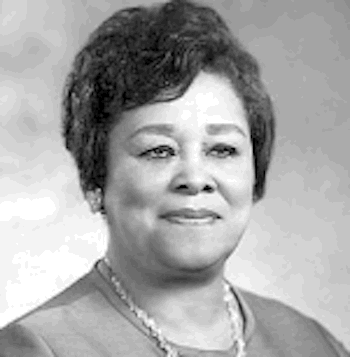
Aurelia Elizabeth Whittington Franklin
While often recognized as the wife of historian Dr. John Hope Franklin, Aurelia was a leader in her own right making sustainable impacts through civic engagement and community advocacy. She was a lifelong dedicated educator, philanthropist, and worked to preserve Black history while creating educational opportunities for Black students, specifically Black girls and women.


Brown v Board of Education
On May 17, 1954, the U.S. Supreme Court unanimously ruled to abolish school segregation as it violated the 14th Amendment.
This decision in Brown v. Board of Education legally initiated integration, but enforcement at the state level was slow to manifest, particularly in the racially tense southern states.


.png)


Darius Swann
The Rev. Darius L. Swann, whose efforts to send his young son to a racially integrated school in Charlotte spurred a Supreme Court decision that unanimously endorsed busing, igniting a national debate over tactics to unravel segregation in public schools, died March 8 in Centreville, Va. He was 95.The cause was pneumonia, said his wife, Vera Swann.


Dorothy Counts
Photo On Left: 1957 Dorothy Counts, 15, attempts to become the first black student to attend Harding high school in Charlotte, North Carolina. Dr Edwin Tompkins, a family friend, escorts her. Photograph: Douglas Martin/AP
Photo On Right: 2018 Dorothy Counts-Scoggins poses for a portrait outside of the school she attempted to integrate on 4 September 1957. Photograph: Logan Cyrus for the Guardian

Dr. Benjamin F. Speller, Jr.
born in Bertie County in 1940, his paternal grandmother was named Outlaw, Dr. Ben Speller, a retired professor and dean of the School of Library and Information Sciences at North Carolina Central University, left his family’s farm in Bertie County in the 1950s, but his journey eventually led back to his childhood home where he stays active in the community.

Dr. Charlotte "Lottie" Eugenia Hawkins Brown (June 11, 1883 – January 11, 1961)
"I must sing my song. There may be other songs more beautiful than mine, but I must sing the song God gave me to sing, and I must it sing until death."
-Dr. Charlotte Hawkins Brown
Born, Lottie Hawkins, Dr. Charlotte Eugenia Hawkins Brown, educator and founder of the Palmer Memorial Institute, was born in Henderson, NC. Palmer was a private school operating for more than 60 years, and Dr. Charlotte Hawkins Brown was its leader for 50 of those years.


Dr. Lorenzo Dow Turner
(August 21, 1890 – February 10, 1972)
He was born in Elizabeth City, North Carolina and was an African American academic and linguist who did seminal research on the Gullah language of the Low Country of coastal South Carolina and Georgia. His studies included recordings of Gullah speakers in the 1930s. Turner is best remembered as the father of Gullah studies.
.png)

Dr. Willa Johnson Cofield
During the years of segregation, she was a voice for truth and justice and a very courageous teacher activist in Halifax County, NC. As a young teacher in an all-Black segregated school in Enfield, North Carolina, Willa Johnson taught her students how to register to vote, and those students went home and taught their parents.


Elizabeth Johnson
Photograph:Elizabeth Johnson wears a Winston-Salem State University cap and stoll that she received as a gift to reveal that she will be walking with this year's graduating class during a surprise party for her 99th birthday Thursday, May 2, 2019, at Pinecrest Retirement Community in Hickory, N.C.--credit Allison Lee Isley/Journal


.png)

.png)


Ida Van Smith - March 21, 1917 – March 13, 2003
Ida Van Larkin was born in Lumberton, North Carolina and her interest in aviation began when she was a child when she took an interest in barnstorming and wing-walking exhibitions in Lumberton. Smith worked as a history and special education teacher until the age of 50 when she fulfilled another dream of learning to fly. After gaining her private pilot’s license and instructor rating, Smith founded the Ida Van Smith Flight Club on Long Island, New York which introduced thousands of children aged three through nineteen to careers in aviation and space to encourage their involvement in aviation and aerospace sciences.
Images sourced from National Museum of Air and Space, Smithsonian Institution.
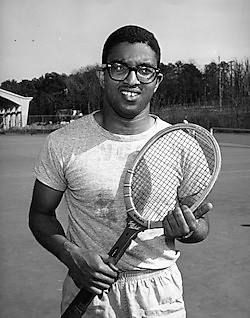


Joe Holt, Jr.
Joe Holt, Jr.: The first student to challenge Raleigh's segregated schools
At 13 years old he became the first Black student in Raleigh to challenge segregated schools. For 3.5 years, his family endured lynching threats, bomb threats and abduction threats — all for the opportunity for equal education.


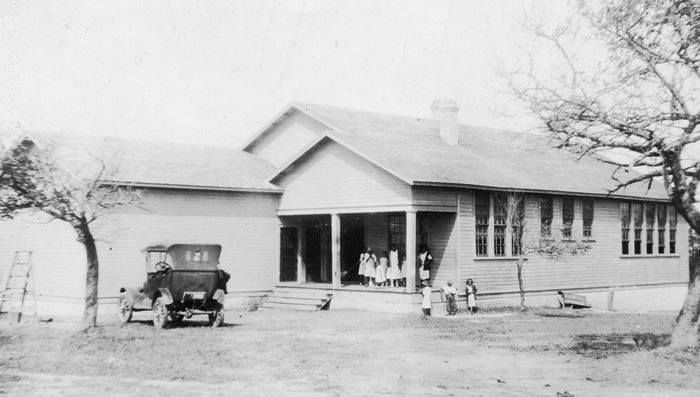
Julius Rosenwald School
Long-Lost Piece of Black History: Early 19th Century Schoolhouse Found
By Monica Manney / Concord
Published 4:15 PM ET Jun. 07, 2021
CONCORD, N.C. — Following the abolition of slavery, a Jewish philanthropist learned African Americans had little access to education. So, he built more than 5,000 schools across the South.


Laura Washington Hardy
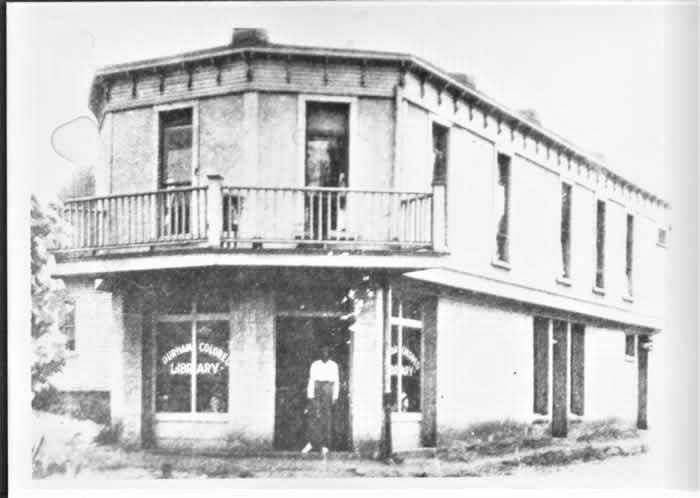
was Kinston, NC's pioneering first Black librarian, starting in 1938 at the Kinston Public Library, Colored Branch. It was a vital community hub she built from a small space into a thriving center for Black residents. She provided story hours, book clubs, and educational programs for nearly 30 years, significantly boosting literacy and cultural engagement before the branch expanded.

Lincoln Academy
Lincoln Academy, named after President Abraham Lincoln, was opened as a boarding school for African-American girls in the fall of 1888 by Emily Catherine Prudden. On the 23rd of January, 1888, Miss Prudden, an educator and missionary, obtained land for the academy when she paid 141 dollars for 14 and 1/10 acres near Crowder’s Mountain in Gaston County, North Carolina.


.png)
Louise G. Wilson (1920-1987)
In 1965, Wilson began working at the Experiment In Self-Reliance (ESR), a "community action agency" (CAA) that was part of President Lyndon Baines Johnson's "War on Poverty." She became executive director of ESR in 1968, and served in that role until her retirement in 1985.
Image sourced from MUSE-Winston-Salem, NC


Marjorie Lee Browne
On September 9, 1914, Marjorie Lee Browne was born. She was an African American mathematician and professor. She was one of the first African-American women to receive a Ph.D in mathematics.
She was born in Memphis, TN., her father was a railway postal clerk and her mother died before she was two years old. Because her father had taken two years of college, excelling in arithmetic, he passed on his love for math to mathematical concepts to her.


Missing from Presidents’ Day: The People They Enslaved
By: Clarence Lusane- February 12, 2014
“Why We Shouldn’t Forget That U.S. Presidents Owned Slaves”
Missing from Presidents’ Day: The People They Enslaved
By:By Clarence Lusane- February 12, 2014
Image: In this drawing from about 1815, enslaved people pass the Capitol wearing shackles and chains. (Library of Congress)

Mollie Huston Lee
Mollie Huston Lee was born on January 18, 1907 in Columbus, Ohio.
"After graduating from Columbia in 1930, she moved to North Carolina to begin working as a librarian at Shaw University. She was instrumental in organizing the North Carolina Negro Library Association in 1934. It became the first association controlled by blacks to be admitted as a chapter of the American Library Association.

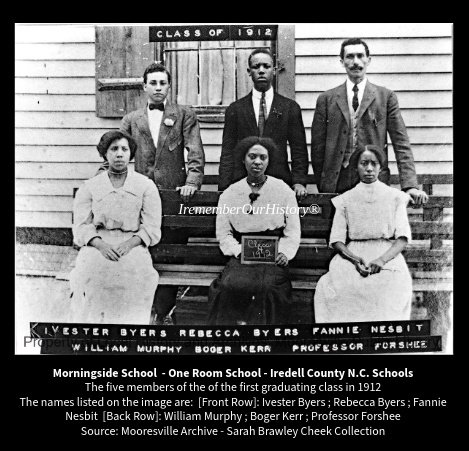


.png)
Nettie McGimpsey McIntosh
Left photo of Nettie McGimpsey McIntosh (1927-2014),.pictured here in 2004 donating to the History Museum of Burke Co., a wash pot that was on her grandparents' farm.
Right photo: Photo of Nettie McGimpsey McIntosh's grandfather, Riley Rufus McGimpsey, his wife and their children taken in 1903 in Burke Co., NC. This photo hangs in The History Museum of Burke Co., NC.

North Carolina Congress of Colored Parents and Teachers, Inc.
This is a copy of the "BYLAWS North Carolina Congress of Colored Parents and Teachers, Inc."
(As amended at the Annual Convention, November 1953, in Kinston, N.C.)
*This belonged to the grandparents (Rev. G.C. And Frances J. Hawley) of one of the co-creators and Admin of The G.C. And Frances Hawley Museum ®


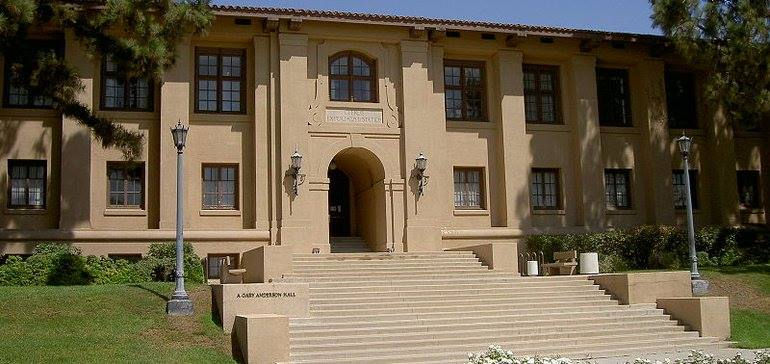


.jpg)


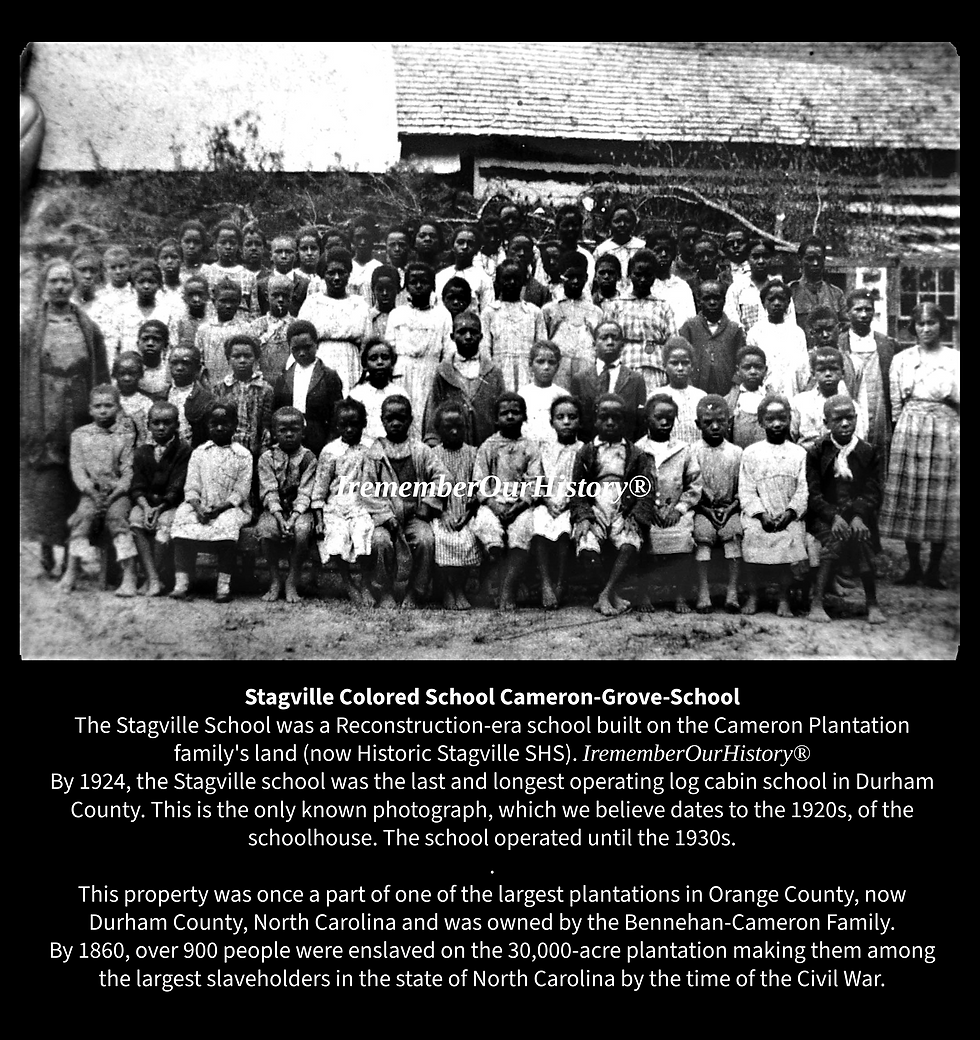




The Origins of Black History Month - Dr. Carter G. Woodson
From: The co-owners and co-founders of, I REMEMBER OUR HISTORY® - The G. C. AND FRANCES HAWLEY MUSEUM®,
If you have been following our G.C. AND FRANCES HAWLEY MUSEUM®-NC Black History website, fb and ig pages for at least a year then you know we don't do "special" Black History Month posts.
We share Black History almost every day of every month of every year. We did decide to make this post to help others learn about the origins of Black History Month in America.
We thank those of you who support us and learn from us. Your engagement and encouragement helps us fulfill the vision gifted to us to accomplish.


Zula Clapp
Zula Clapp (1882-1976) was 1 of 3 girls who made up the first graduating class of Palmer Memorial Institute, in 1905. She married Riley Totton in 1918. Together they reared 12 children and instilled in them the value of educational pursuit and moral character. Her high school years were spent at Palmer Memorial Institute. She taught school for several years, but after marriage, she devoted time solely to family and church activities.